Archive
What he said and wrote himself
Much has been written about Hahn Dae Soo, but first-hand records in his own voice are rare. This page holds two: the full text of an interview held over two days in New York in August 2019, and a memoir he wrote by hand and sent in January 2022 to refute the claim that ‘Land of Happiness’ was plagiarized. Both are given here in English translation; the Korean originals are on the Korean page.
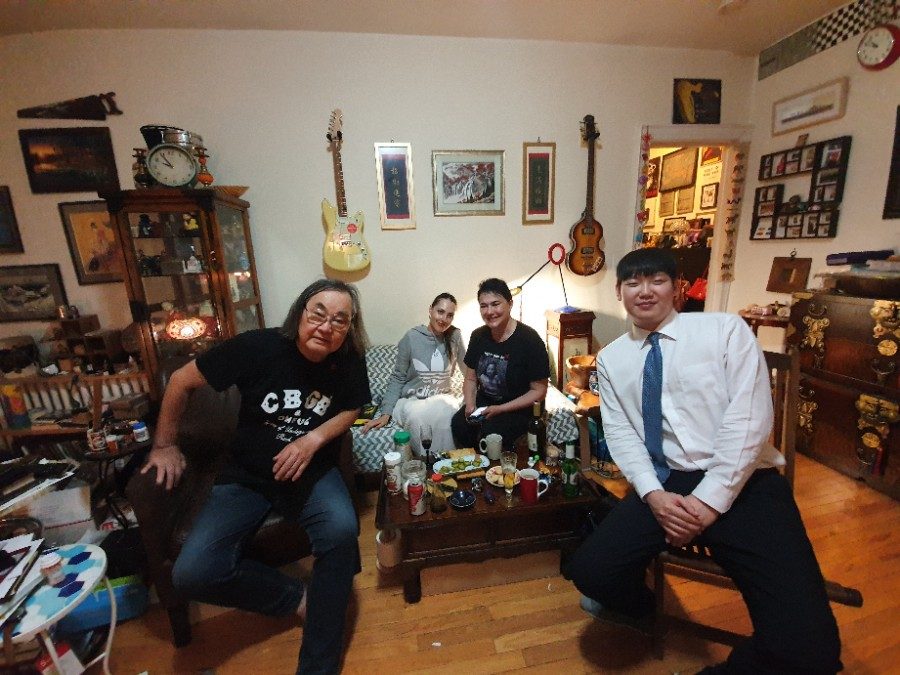
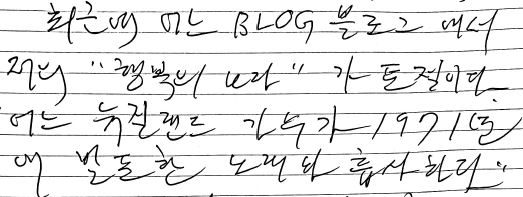
Interview · 2019.08.06–07
Two days in New York with Hahn Dae Soo
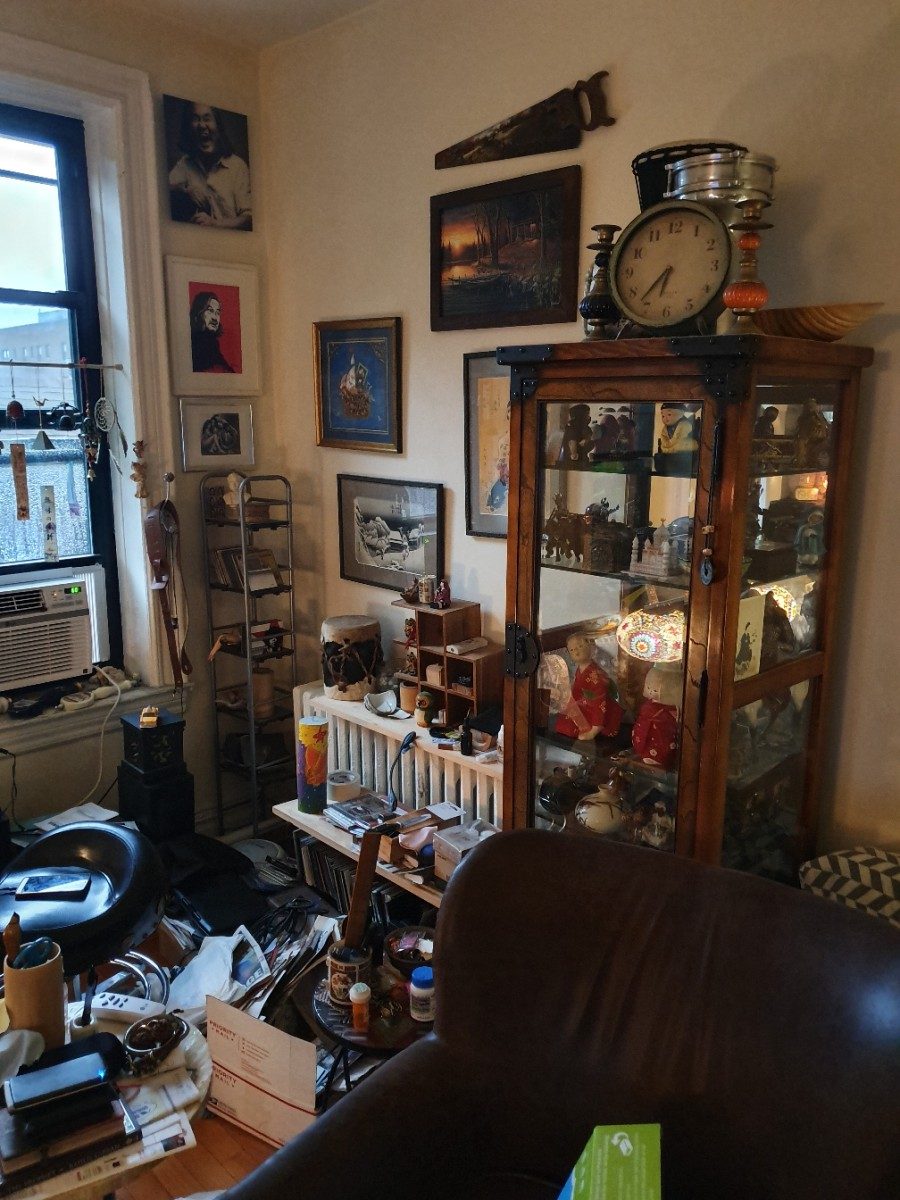
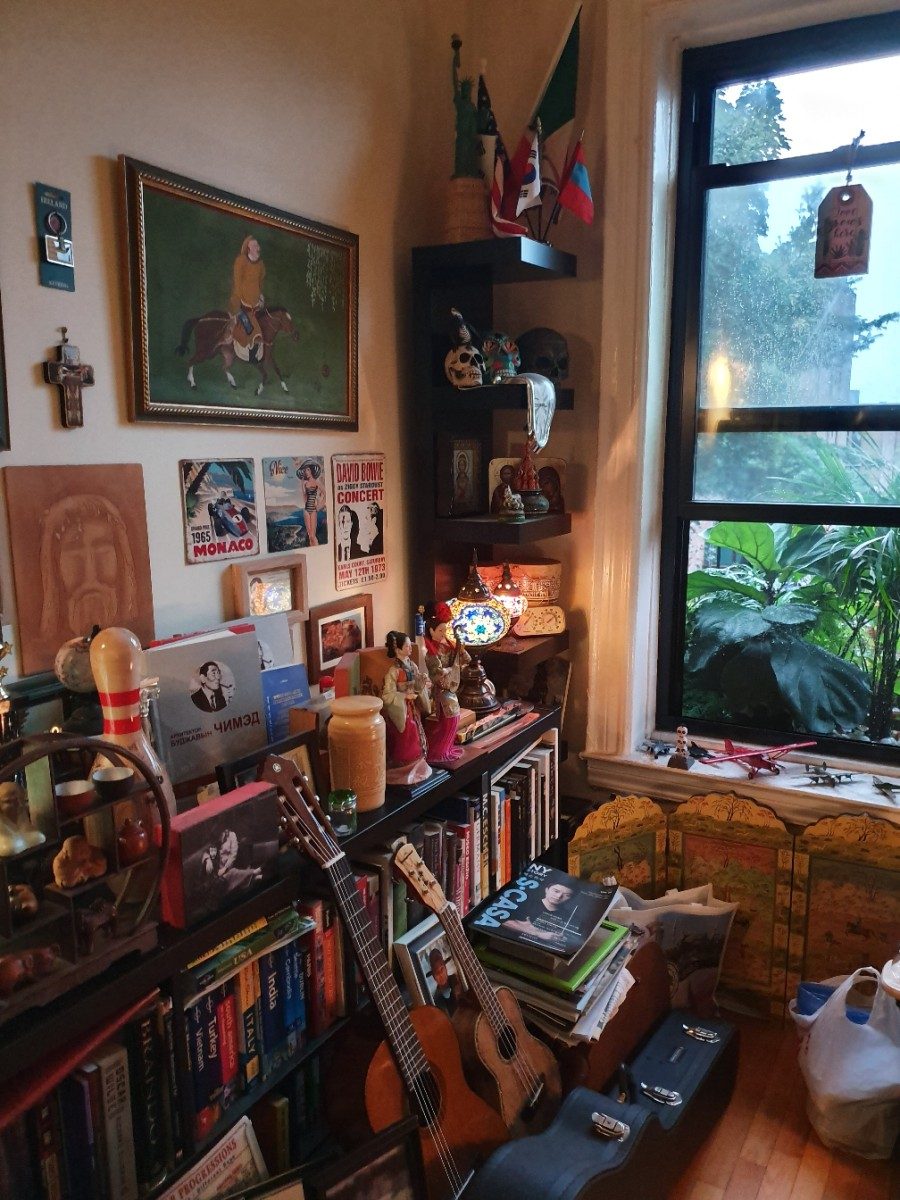
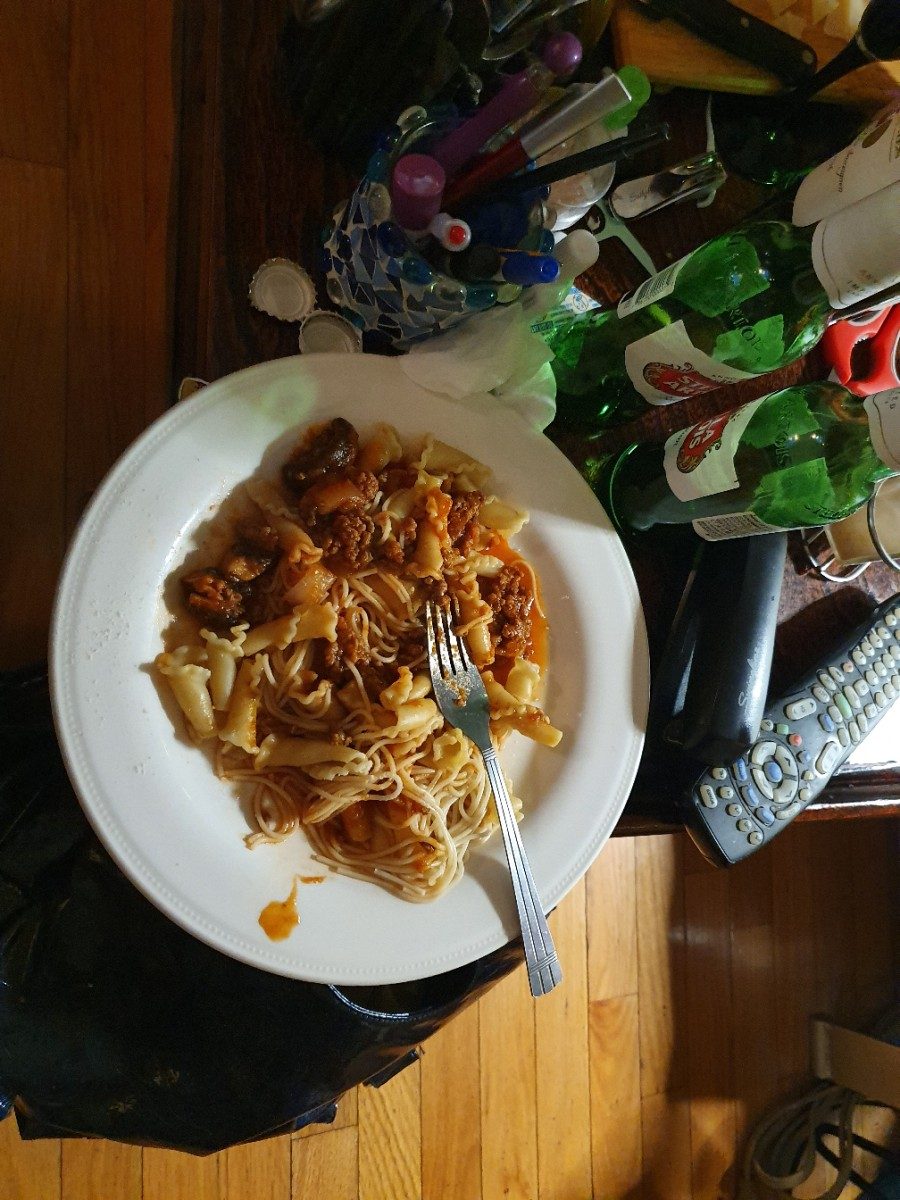
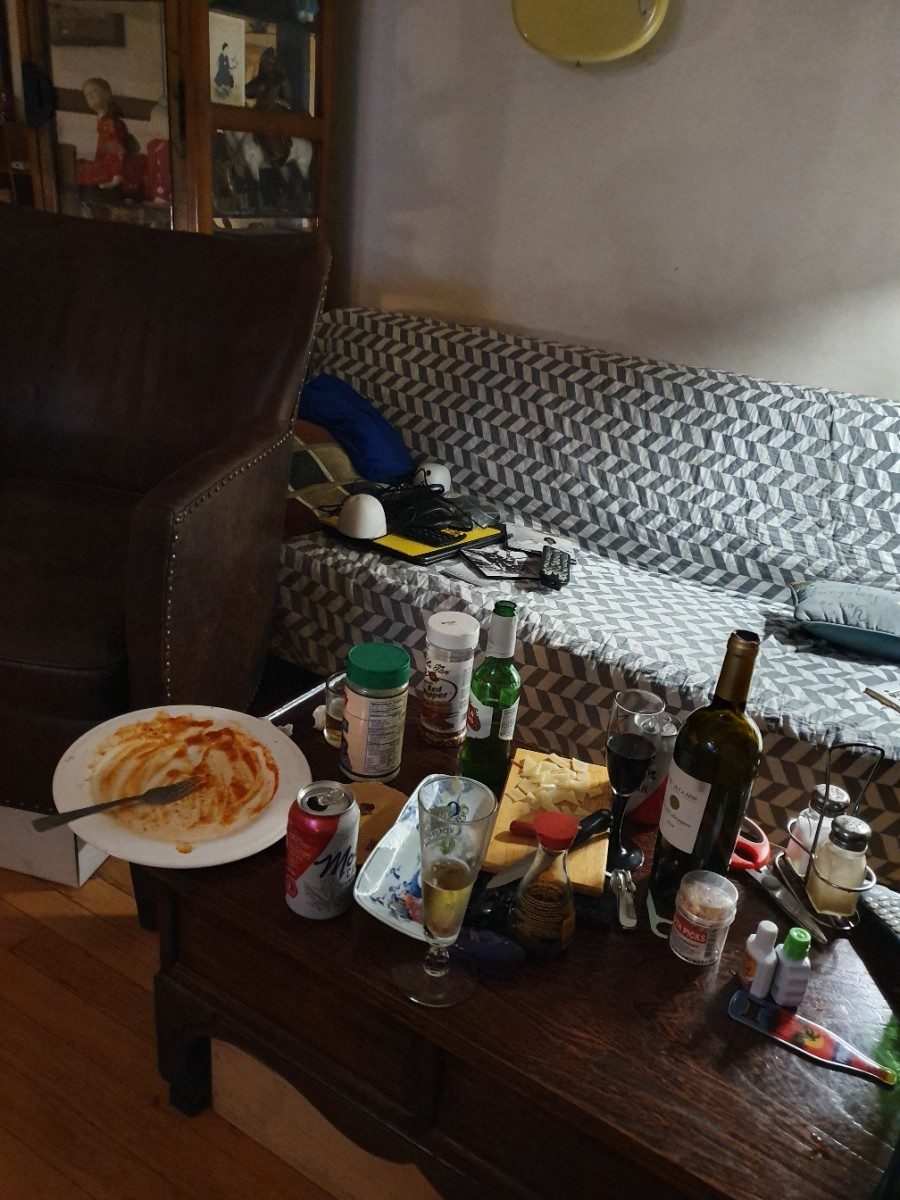
An hour in a park at 32nd Street and Broadway in Manhattan on the first day, and at his home in Queens the next. At his home, the one-hour interview was followed by three hours of music and drinks. Translated from the Korean.
Korean popular music history is Hahn Dae Soo. I would say flatly that there is no Korean popular musician who has not been influenced by him. If the abstract idea of ‘chaos’ were projected through a film projector, it would be his life. Even the labels produced by efforts to define him are, paradoxically, only simulacra that take us further from what he is.
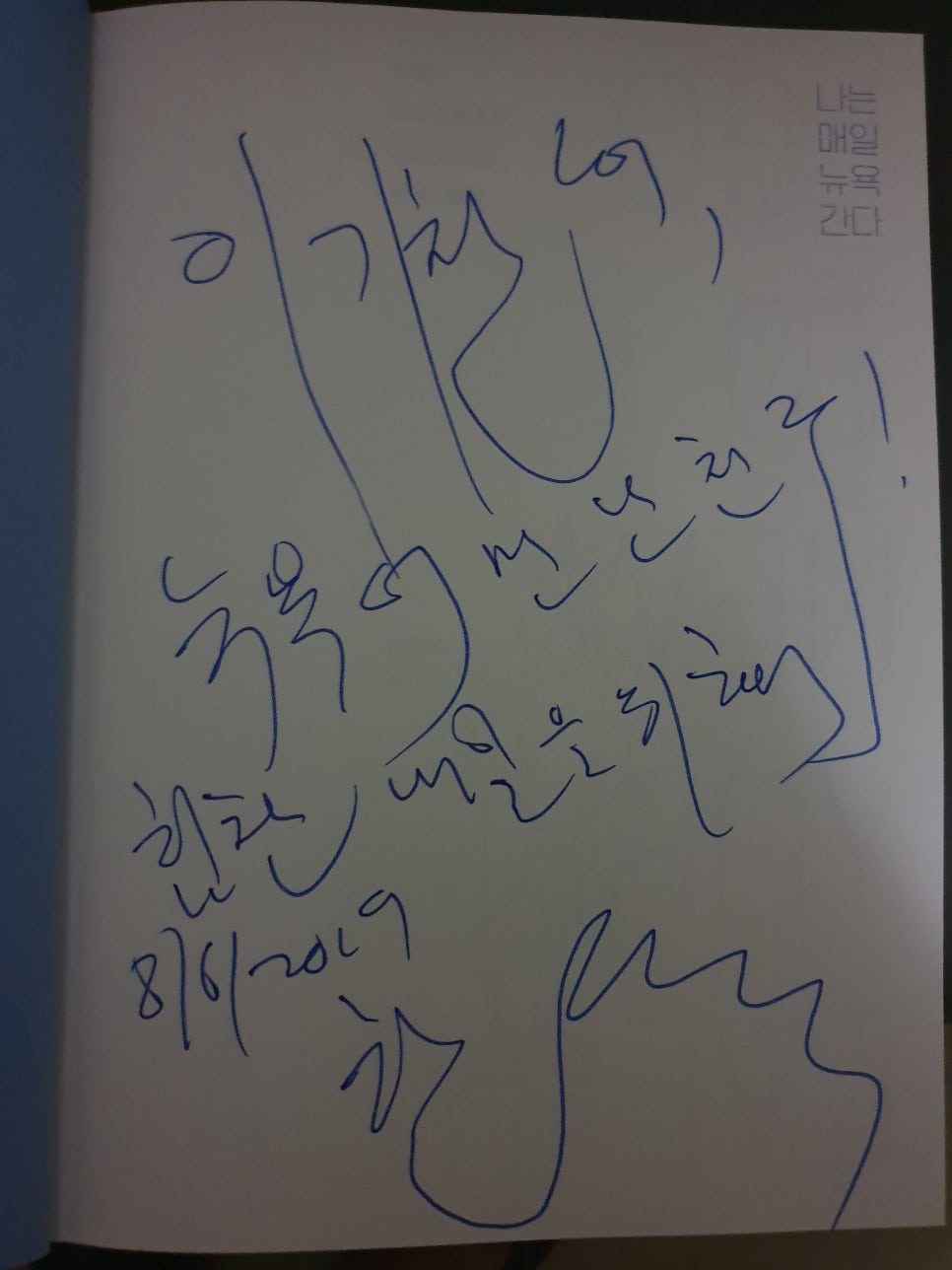
He used to lament that most of the material about him in the sea of information was a flood of fake news, and last June he published the essay collection 〈나는 매일 뉴욕 간다〉 (I Go to New York Everyday). Looking at New York, the hometown he returned to for his daughter, less as ‘a place to live’ than as ‘a place he is still going to’, he gives an honest self-portrait of a New Yorker of forty years. To get even a little closer to the monolith he has built up patiently over more than half a century, I asked him for an interview over two days in New York. It was closer to a frank one-on-one conversation. The first day was at 32nd Street and Broadway in Manhattan, the second at his home in Queens.
Meeting Hahn Dae Soo at 32nd Street and Broadway, Manhattan
It has been about three years since you came to New York, and you have published 〈나는 매일 뉴욕 간다〉. What is the best thing about living in New York?
I have lived in almost every big city in the world. What is special about New York is that, as the view we are looking at from this park bench shows, you can see everything in the world. The homeless people lying over there, already one, two, more than three. And then the billionaires in suits walking past. You see everyone, regardless of race, age, sex or class. You learn from the good, and you can take a lesson even from the bad. And New York is the capital of the world. Many rock stars lived here too: Lennon, who made New York his second home though he was sadly assassinated, and David Bowie, who spent his last years in SoHo.
And the downside?
The downside is things like gun violence, which comes from the state guaranteeing the freedom and rights of the individual to the very limit. Isn't it frightening? The problem is not people, it is guns. America is a country founded on guns, so it is fated never to get rid of them. Another thing is the badly aged infrastructure. The quality of life is lower now than when I lived in New York fifty years ago. The population density has shot up, too. Still, the buildings around are much the same as they were then, so I live in New York on those memories. It is right to call it my hometown. Conflict between races has also grown worse since Trump. America used to be called a melting pot of races, but New York now seems to have boiled over. It has ‘melted over’.
As a New Yorker, what musical spots in New York would you recommend? The backdrop of an album cover, for example.
You will know that the cover of 〈The Freewheelin' Bob Dylan〉 was shot on West 4th Street. And there is ‘Positively 4th Street’, written when he was living on 4th Street with his girlfriend. Joni Mitchell and James Taylor probably still live here, and the Chelsea Hotel of Leonard Cohen, who passed away not long ago, is right here in Manhattan.
Some people call you the Bob Dylan of Korea.
I am a New Yorker, but I don't really like Bob Dylan. I'd like to be called the Neil Young of Korea. I saw Dylan live more than thirty years ago and felt his show was so self-assertive that it showed little consideration for the audience, and I felt too much arrogance in the recent episode of his not attending the Nobel Prize ceremony. People say someone like that has a God complex, acting as if he had become God. I think Neil Young and I are alike in the way we sing and in our skewed view of life. Do listen to 〈After The Gold Rush〉.
Do you have a ‘place of your own’?
I have many wounds. There is even an album called 〈상처〉 (Wounds), isn't there. It was the fountain park near 53rd Street that soothed the wounds in my heart after my divorce. I also often go to Tompkins Square Park near the East Village, where many musicians live. It is dirty, but it smells of human suffering. In bookstores like Barnes & Noble I rest comfortably and heal the pain.
You have said life is a journey. Is New York its final destination?
No. New York is where I am raising my daughter as a citizen of the world, and I have no intention of dying here. I like Seoul. There is the pleasure of going out at dawn for a cheap bowl of hangover soup. I always miss the warmth of Korean people, which is sometimes almost too much. The public transport is the best in the world, too. Most important of all, the cost of living in Seoul is about a third of New York's. When my daughter enters college and becomes independent, I want to go back to Korea. I have to stay alive until then.
Do you have plans to perform in New York?
About 600,000 Koreans live in the three states of New York, New Jersey and Connecticut. They are so good at making a living that almost all of them have settled in. So I thought 6,000 would come if I gave a concert. As soon as I arrived in New York three years ago I even finished talks with the director of Radio City Music Hall, which has the best sound for its size in Manhattan. The problem is that 6,000 people do not gather, or rather cannot gather. I felt that, for all they have, the Korean community is not in an environment where people enjoy cultural life. Most came here in the 1970s and 80s, so they had little contact with concert culture in Korea, and after immigrating they had no choice but to work extremely hard. I think I could fill the 2,500 seats of the Beacon Theatre, but the procedure is so complicated that things are at a standstill.
You once said “Art is like a fart”, that art bursts out suddenly like a fart. On the business card you gave me earlier, your titles are photographer and journalist, and musician is not there. Are you holding back the artistic urge called ‘music’ for now?
It may sound like an excuse, but even the greatest masters seldom make something new and great once they reach a certain age. Most composition comes from inspiration, and there seems to be a limit to it. You could say there is a period in which one can create. You get inspiration from new stimulation, and having lived this long, it is hard for me to feel fresh stimulation.
People usually see you as a singer-songwriter rooted in folk. But you seem to have tried far more genres than that, enough to bring to mind Gatsby, endlessly desiring and yearning.
Speaking of genre, I remember making my third album, 〈무한대〉 (Infinity), in 1989. The pain of the divorce I went through in New York was far more vicious than I had imagined, and this album sublimates it. When I recorded 〈무한대〉, if you said ‘jazz’ to popular musicians, the genre they usually thought of was ‘blues’. So I tried jazz that held back on the blues. In a way it is also rock.
My fourth album, 〈기억상실〉 (Loss of Memory), in 1990, took on the most cutting-edge outlook in fashion in New York at the time. I listened a lot to musicians like Pat Metheny, Chick Corea and Charles Lloyd. I was full of a sense of mission to show that there is music like this outside our country and that we can do it too. Luckily there was a jazz guitarist named Jack Lee, and he helped me a lot. It was close to free jazz, I suppose.
Next, my fifth album, 〈천사들의 담화〉, in 1992: if you have heard it you know it is minimalism itself. Why? I didn't have a penny. The third and fourth albums had a lot of English lyrics and were avant-garde, so the public turned away. No record company would press a fifth album, and with a heavy heart I just commuted to work in New York and made a living. Then suddenly the urge welled up. I had to let it out somehow, so I recorded it at home with one piano.
Like Bowie's Berlin Trilogy, was the inspiration for your trilogy from 〈무한대〉 on also a place, New York?
Yes. That was a hard time. The albums of the 2000s after that were made in relative comfort. I remember making 〈Eternal Sorrow〉 in 2000. The guitarist Sohn Moo-hyun produced it very cleanly. The best session players in the country gathered for it: Hahm Choon-ho, Lee Woo-chang, Shin Yeon-ah and others. 〈상처〉, from 2004, was also done cleanly at the Kyung Hee University studio. I called the best-known session players then too, and by now they are masters, aren't they.
At his home in Queens: ‘Living is damn it, dying is damn it!’
Let me list a few of the people on 〈Rebirth〉, the 2015 remake album for your 40th anniversary. Cho Young-nam, Jeon In-kwon, Lee Sun-hee, Shin Dae-chul and more. It is the history of Korean popular music.
That album was well produced and is really good. Listen especially to track 10, ‘Run Baby Run’. Kim Mok-kyung, Shin Dae-chul, Kim Do-kyun and Sohn Moo-hyun, all the people who play blues guitar well, came together. They are called 4G. I remember recording it in high spirits, and I was really satisfied with the finished work.
Those albums have all been reissued on LP now. Have you heard them on LP?
I have no turntable at home, so I haven't. Decades ago I sold my turntable and my whole LP collection for next to nothing. These days I listen to music almost entirely on CD. Recently my daughter Yangho connected YouTube for me, but I still can't get used to digital sound. The dynamic range is too thin.
Then what music do you listen to often these days? Is there music that has moved you?
There is too much music. In the old days you had to go to a music café to hear what the DJ played. I lived in Myeongnyun-dong as a boy, and I remember hearing the Beatles' Abbey Road at the Queen café. That is what nourished me. The problem now is that music plays in every restaurant, clothing shop and bookstore. It is an excess of music forced on you. As the value of listening to music fades, there seem to be more entertainers than great musicians. That may be the current of the times. Sometimes I wish there were no music. A conversation with someone whose voice is good to hear, how good that is. And the sound of the wind in this park right now.
Perhaps in an age with too much music, silence too can be music. Like ‘Nutopian International Anthem’, the three seconds of silence on John Lennon's 〈Mind Games〉.
Exactly right. ‘Silence’ is music too. I also have a book of poems called 〈침묵〉 (Silence), and a song titled ‘침묵’ on my fifth album, 〈천사들의 담화〉. It holds silence, literally. Another song connected with silence is ‘Headless Man’, the one I cherish most on my fourth album, 〈기억상실〉, which goes together with the fifth.
What kind of song is ‘Headless Man’? Looking at it now, the English lyrics are startling.
According to the Apocalypse, when the earth is destroyed a headless horseman roams it seeking the way. It probably also holds my wish to become the ‘headless man’ of popular music. And in a double sense I thought of the literal meaning of the title, a man without a head, that is, an empty-headed person. One line places the headless man walking down 5th Avenue and 53rd Street. That is where the Museum of Modern Art and St. Patrick's Cathedral are, and whatever anyone says it is the center of the earth. The photo studio where I worked at the time was near there, too.
In an earlier interview you said you have no album or song you especially cherish. For someone new to Hahn Dae Soo, in what order would you recommend the albums?
I think a good way is to start with the second album, 〈고무신〉, which is pure and has a lot of orchestration, then 〈무한대〉 and 〈Eternal Sorrow〉, then the seventh album, 〈이성의 시대, 반역의 시대〉 (Age of Reason, Age of Treason), and then 〈고민〉 and 〈상처〉 from the 2000s. Surprisingly, my first album from 1974, 〈멀고 먼 길〉, is the most difficult one.
That is not what I expected. With ‘행복의 나라’ and ‘물 좀 주소’, the first album must be the most familiar to the public.
Yes. And it is 45 years old. But the first album is never one to listen to comfortably. There is hardly any orchestration. The more you listen, the more unusual and difficult it gets. I recommend sinking deep into it. Even I think 〈천사들의 담화〉 and 〈욕망〉 are oddballs. 〈욕망〉 in particular is a fun album: Jang Young-gyu produced it and I worked with Dalpalan, Bang Jun-seok and others. ‘지렁이’ is something young people might like, too. If you want to hear straight rock, I also recommend 〈이성의 시대, 반역의 시대〉 from 1999, which I made in New York with the producer John Rollo. Soft rock was in fashion then and I hit it far too hard and sharp, so it flopped. For enjoyable listening, the 40th anniversary album 〈Rebirth〉 is good. I applaud every artist who took part. I was especially surprised by the remakes by Lee Sang-eun and Lee Hyun-do.
Last year in Korea you narrated a stage piece called 〈할리우드와 피터의 늑대〉.
I enjoyed it. In the American version the narration was done by Alice Cooper. Alice Cooper does shock rock, too, and comes from a family of ministers. He isn't well known in Korea, but I like him. I have tended to like almost all the artists in fashion, but there are many lesser-known musicians I would like to recommend.
Sometimes one is drawn to those outside the mainstream.
Listen to Screamin' Jay Hawkins, the man of ‘I Put a Spell on You’. When I lived in Hollywood I saw him in a small club that held 150 people and became a complete fan. They say that after Screamin' Jay Hawkins, born in 1929, died in 2000, more than twenty people claimed to be his children. Even the famous Mick Jagger has fewer than ten, doesn't he. A great artist, a cut above. In electronic music I like Jean-Michel Jarre, and I also recommend Brian Eno's solo albums.
The title of the column you wrote in the Chosun Ilbo for about four years, ‘사는 게 제기랄’, was striking.
After the divorce, living was too hard, but dying was frightening too. Living is damn it, dying is damn it. It means something like: you live, and I live too. The original title was ‘Hahn Dae Soo's The Wind and I’. I am the one who wrote ‘바람과 나’ (The Wind and I), sung by Kim Min-ki and Kim Kwang-seok. In fact the title I wanted was ‘Life is a bitch and then you die’, but the editor toned it down a little. In the end we each gave way a bit. I think the Chosun Ilbo was brave to use me as a columnist, too. I am ready to write a column again. Concert or book, I am ready to do anything if the offer comes.
Not much is known about Genghis Khan, the band you were in in New York when you were young.
They were New Yorkers. Everyone had two jobs. Some members moved furniture, and one worked as a porn actor. It didn't go well, we scattered, and the master tape was lost. I was in my early twenties then. I should have worked harder, but I gave up quickly after a little over a year. Around us, bands we played alongside, like Blondie and Talking Heads, were taking off. The Jewish people who lead New York tended, then as now, to back young musicians. People think Jewish equals money, but you should think Jewish equals money equals art. I think the lack of that kind of support for us was the reason we failed. I wanted to be a rock star then, too. Sometimes I felt a sense of loss, wondering whether I might have succeeded with enough backing. For example, Bruce Lee became the first Asian to succeed in the West with 〈Enter the Dragon〉. If only I had devoted myself to music then and become the first Asian rock star.
What are your plans?
I have just been to the emergency room twice because of my heart, and came through a brush with death. Look at the device attached to my heart now. I want to live long, but I don't know whether it will go my way. From what I have studied, rock stars usually die young. At 27, or suddenly. A legend like Mick Jagger is still alive, but even he recently lost a whole tour schedule to a sudden health problem. McCartney is about the only one still going strong. I want to keep my body in shape like him, keep singing if I can, and perform again when I go back to Korea. I will look after my health and live as long as heaven allows.
Finally, tell us your motto.
Didn't I say it earlier? Living is damn it, dying is damn it! Ha ha ha.
Memoir · 2022.01.15
‘Land of Happiness’: the story as Hahn Dae Soo wrote it
Early in 2022 a post circulated online claiming that ‘Land of Happiness’ was plagiarized from a foreign song. To refute it, Hahn wrote out by hand and sent the story from writing the song in 1967 to leaving again for New York in the mid-1970s. The full text follows, translated from the Korean.
Contents
- 1. Writing ‘Land of Happiness’
- 2. From New York to Seoul
- 3. ‘Land of Happiness’ on the C'est Si Bon stage
- 4. ‘Land of Happiness’ on television
- 5. Guitar teacher
- 6. The Drama Center
- 7. A parting, and Lee Hye-jeon
- 8. The Korea Design and Packaging Center
- 9. Seaman Hahn Dae Soo
- 10. Seaman Hahn in the office of the Chief of Naval Operations
- 11. Yang Hee-eun's ‘Land of Happiness’ and my album 〈멀고 먼 길〉
- 12. Discharged from the Navy at last, after three years and three months
- 13. The Korea Herald
- 14. The release of 〈고무신〉 and exile to New York again
(Edited from the text Hahn Dae Soo sent, and translated here from the Korean.)
Recently a post went up on a blog saying that my song ‘행복의 나라’ (Land of Happiness) is plagiarized, that it closely resembles a song a New Zealand singer released in 1971. This is not true. I wrote ‘Land of Happiness’ in 1967, and there is plenty of evidence.
I do not usually respond to things written on the internet. Malicious and jealous people always follow one after another to attack well-known people and tend to find it satisfying. But I am now 74, and I do not have much time left to walk this earth. So, for my wife Oxana and my daughter Yangho, I think I must from now on arm myself with facts against such malicious lies. I ask you to help protect our family.
What follows is the story of ‘Land of Happiness’.
1. Writing ‘Land of Happiness’
One weekend in 1967, after finishing my part-time job at my father's print shop in Manhattan, I was going home on the LIRR train to Long Island. From the upper deck the open country stretched wide and white clouds floated in a blue sky. It was very beautiful. But I was in great pain and sorrow. My father, absorbed in his business, was too busy for me to see his face, and my white stepmother's mistreatment made life hard.
That is how ‘Land of Happiness’ came to be. “Ah, I will live, if only the sun shines.” I wrote it to give myself courage, because I wanted to die. And the first line, “Draw back the curtain,” came from my sorrow at the division of Korea, which I compared to the Iron Curtain. It was the Cold War, when America too was on guard against communism.
I also missed my best friends from high school in Busan, Gorilla and Ttobogi, and wanted to go back to the innocent days when I could hear “the sound of children playing.” Long Island then was a completely white neighborhood, and our high school was 100 percent white. So I had a problem of identity, too. My father had completely forgotten his Korean, so there was no link between us, and I was very lonely. ‘Land of Happiness’ was written at such a time.
2. From New York to Seoul
Early in 1969 I went back to Korea at the urging of my mother, who was there. My uncle, a big businessman, had seen me living in a slum in the East Village in Manhattan and told my mother. “Sister, Dae Soo is going to die at this rate.”
So my mother sent a letter: “Dae Soo, if you live in a slum crawling with cockroaches and rats, not eating properly and taking drugs, you will soon die. I will send you to college, marry you to a pretty bride and get you a house, so come quickly! And pray without ceasing.” So I slung my GOYA guitar and NIKKORMAT camera over my shoulder and boarded a Northwest plane. (There was no Korean Air then.)
3. ‘Land of Happiness’ on the C'est Si Bon stage
Back in Korea I lived in the annex of my mother's house in Myeongnyun-dong, and out of boredom I took my guitar to C'est Si Bon, the only place in Seoul where you could play live music. A big man looked with interest at my long hair and torn jeans and said, “You want to sing here?” As soon as I said “Yes,” a bowl of jajangmyeon was delivered. When I had eaten it with relish he said, “All right, now get up on stage and sing.”
I was so excited that when I got on stage everything went dark. Then Lee Baek-cheon, the top show producer of the day, said, “Ladies and gentlemen, today at C'est Si Bon a special guest who has come back from America and prepared a stage for you makes his debut,” and applause poured out. With a harmonica around my neck, playing the guitar like a madman, I sang ‘Land of Happiness’ first, then ‘Till That Day’, then ‘옥의 슬픔’.
The thunder of applause was like a storm. For the audience it was the first time they had seen a man with such long hair, the first singer who wrote his own words and music, the first singer who blew a harmonica hung from his neck while playing the guitar, and the first young man in torn jeans.
The two people watching me intently from the side of the stage were Yoon Hyung-joo and Song Chang-sik of Twin Folio, who had made their debut with ‘하얀 손수건’. The packed audience was mostly college students, and more than 70 percent were women. At C'est Si Bon in those days women could smoke freely, and though it was only instant, it was the first place in Seoul where you could drink coffee.
Lee Baek-cheon, a graduate of the English department of Seoul National University, saw the young people's excitement at my music and, as soon as I came off the stage, welcomed me in fluent English: “You are great, come to my show tomorrow morning at TBC!”
4. ‘Land of Happiness’ on television
Korea then had two TV channels, KBS and TBC (Tongyang Broadcasting). I went on TBC's program “명랑백화점”. The MC was the famous announcer Kim Dong-geon and the bandleader was Lee Bong-jo. It was a game show, but that day they made a special request for me to sing live. I was trembling and so afraid that I shut my eyes tight and sang as if shouting, like someone out of his mind, and blew the harmonica. Just one song, ‘Land of Happiness’.
The viewers were the announcer, the bandleader, the producer and millions of people. Thanks to the Saemaul Movement every village had been given a TV, and it was a time when a hundred villagers would gather in front of the laundry every night to watch. Early in 1969 ‘Land of Happiness’ made its debut to the whole country through C'est Si Bon and TBC TV.
5. Guitar teacher
Three days after my TV debut, Sooni, who helped out at my mother's house, called, “Dae Soo oppa, there's a phone call, come quick.” On the phone a voice said: “Mr. Hahn Dae Soo, I am a fan of yours. My best friend and I watched TV together and were so moved by your performance. The music is really good, and we felt the freedom of the American hippies. It would be a great honor if you would teach us your songs and the guitar. We will pay whatever lesson fee you want. We very much want to meet and talk. Where do you live?” When I said Myeongnyun-dong, she said she went to the College of Liberal Arts and Sciences at Seoul National University, ten minutes away on foot.
When I met them they were two very attractive college women. One was Geumbong (not her real name), in home economics at Ewha; the other was Baduk (not her real name), in French literature at Seoul National University. Both were daughters of very wealthy families, and Baduk's family owned a very famous chain of Korean restaurants in Myeong-dong.
I was not really good enough then to be a guitar teacher. But in Korea in the 1960s guitarists like today's Kim Do-kyun, Han Sang-won and Hahm Choon-ho had not yet appeared, and there were only guitarists who could play something like ‘목포의 눈물’. We met once a week, learned mostly one chord at a time, and played songs like ‘Danny Boy’ and my ‘Land of Happiness’ together.
The rest of the time we sat comfortably in my room, talked about our worries and dreams, and smoked in secret. It was a happy time. In those days, if a woman was seen smoking, it was accepted that an elder might slap her without warning.
6. The Drama Center
Geumbong and Baduk truly loved my songs. They especially liked ‘Land of Happiness’, ‘바람과 나’ (The Wind and I) and ‘마지막 꿈’, and knew the words by heart as they played. One day the two of them said with serious faces, “Mr. Hahn, we have something to say,” and told me I must give a solo recital.
The reason was that my songs were too good for only the two of them to hear, that trot, with Lee Mi-ja and Nam Jin dominating Korean music, could hardly comfort the hearts of the people, and that my philosophical words would give strength to many young people. When I asked where the money would come from, they said they had saved three months of their allowances from their wealthy families. “All right! I will repay your sacrifice and your passion!” I said, and decided to do it.
All that summer I practiced in a back room in Myeongnyun-dong. There was no band; the only member was me. Hardly anyone played guitar or drums then. The concert was two days, September 19 and 20, 1969. There was no band and, of course, no sound engineer.
One day I was walking through Myeong-dong and saw speakers and microphones displayed on the street. Ah, could this be the place? “Sir, I am giving a concert at the Drama Center in September. Could I rent two microphones, an amplifier and speakers?” “Wait a minute. Aren't you the hippie singer Hahn Dae Soo?” Yes, I am Hahn Dae Soo. Not a hippie singer, just a singer, ha ha. So I rented four microphones, two for guitar and two for vocals. A shop I will never forget.
The sound at the concert was better than I expected. I was deep in Pink Floyd's music then, so before I came on stage I played the sounds of a clock and a train and lit incense and candles. To hold the audience's attention I had the spotlight shine from behind my back, and I played a big saw with a violin bow. People were astonished. They had never seen anything like it.
On top of that, when they heard my singing, a very husky voice mixing Gyeongsang dialect and English pronunciation, the audience was in shock. From ‘Land of Happiness’, the first song, which begins “Draw back the curtain,” to the last song, ‘잘가세’, I held the 500 people tightly in my hand.
I worked hard on the rest of the program too. I had met the yodel singer Kim Hong-chul, not long back from Switzerland, and had him make his debut at my recital. It was an exotic sound heard for the first time. A hit!
And the famous sculptor Jeon Guk-gwang, now dead, was a close drinking friend of mine. Besides his gift for sculpture he was a very avant-garde poet. At the concert I dressed him in a black turtleneck and had him recite a poem. Like Rod McKuen: “There is a liver in my body! Throw it away! There is a heart in my body! Throw it away! There is love in my body! Throw it away! There is jealousy in my body! Throw it away!...”
With a duet by Yoon Hyung-joo and Song Chang-sik of Twin Folio and Lee Baek-cheon as host, it became a very fine show, entertaining and avant-garde. I felt deep gratitude to my patrons, Geumbong and Baduk. Without the Drama Center concert the two of them sponsored, I could never have run down the road of music afterward.
7. A parting, and Lee Hye-jeon
Soon afterward I came to appear on “명랑백화점”, an entertaining program combining comedy and live music that Lee Baek-cheon, then the top producer at TBC, had modeled on the popular American show “Laugh-In”. The MC was Kwak Kyu-seok, and the cast were the most popular stars of the day: the Pearl Sisters, Twin Folio, Kim Sang-guk, the comedian Jeon Woo-sung, and me.
We recorded live once a week, and one day an attractive actress, meeting me on the stairs, said, “Mr. Hahn, I love your music. There is a good naengmyeon place in the next alley. Will you come with me?” ‘Wow, such a beauty likes my music?!’ “Yes, of course, let's go now,” I said, and took her hand.
Lee Hye-jeon was a very cheerful, open and attractive woman. In a miniskirt, her figure was beautiful in a way all its own. She lived in the Mapo Apartments, the first apartment building in Korea, so I visited often, we drank beer, and we became close.
Hye-jeon, two years older than I, became my teacher in love. Drunk on wine and love, I was walking the streets at dawn; the streetlamps were still lit and the wind brushed past my long hair. So: “Looking up at the streetlamps, dawn is breaking, the wind lightly blowing my hair, is this love?” The song ‘사랑인지’ was written like that, on the spot.
As time went on, my two good patrons also noticed that I was in love with a TV actress, and things between us grew somehow awkward. As I grew close to Lee Hye-jeon I naturally drifted away from the two of them. “All good things must come to an end.” I gave each of them one of the photographs with which I had won a prize in the photography section of the National Art Exhibition that year, hugged them tight and told them I would be grateful forever. With bitter smiles, somehow hurt, the two of them closed the door of my room and disappeared.
“Farewell, my friend. My love, leaving a smile without meaning, with time, with autumn, without longing. On this night when the wind cries and roars like a lion. When tomorrow goes and today comes, I will find you again.” From my song ‘잘가세’.
8. The Korea Design and Packaging Center
Then one day I was tired and had lain down for a nap when our housekeeper Sooni called, “Dae Soo oppa, come quick, it's the phone, they say it's the office of the Minister of Commerce and Industry!” On the phone: “Mr. Hahn Dae Soo, this is the office of Minister of Commerce and Industry Lee Nak-sun. His Excellency the President is founding the Korea Design and Packaging Center to develop the packaging design of our export goods. It needs Korea's best designers, sculptors, graphic artists and photographers. Word has spread that, as the only person who studied photography in New York, you are also skilled in color photography! (This was when Kodak was just launching in Korea.) A new building has been designed in front of the College of Liberal Arts and Sciences of Seoul National University. The pay is at the level of a grade 5 civil servant. You will play an important part in Korea's export industry, so please accept!”
It did not feel real, so I asked my mother about a grade 5 civil servant, and she said it was a great opportunity for someone in his early twenties and I must accept no matter what. While I was still thinking it over, another call came the next day. “Mr. Hahn, we held an executive meeting and have decided to pay you at the level of a grade 3 civil servant. Please do not hesitate, and come to the Minister's office at ten tomorrow morning.”
The level of Korean photography then was such that the subjects were mostly dried squid or anchovies, or the dramatic face of an A-frame porter, and of course it was all black and white. “And for your information, Mr. Hahn, you need not wear a tie. All the designers come to work in comfortable clothes.”
My mother, who used to burst into sad tears every time I sang on TV, was overjoyed when I started going to work at the Design Center. She had majored in classical piano and thought my playing guitar and folk music was low-class. The allowance of 20,000 won I had been getting became 30,000 won, and she began to boast about me to her friends.
The atmosphere at the Design Center was more open than I expected. There was a sculptor who had studied in Germany, a woman artist who had worked as a graphic designer in England, and the famous Yeom In-taek, who designed the banknotes issued by the Bank of Korea. He later won fame as the designer of the Arirang cigarette pack and, as a master of graphic design, worked closely as a team with my photography. He was truly sincere and cool, so from the first day we were like brothers, and after that we shared soju almost every day.
The pay of a grade 3 civil servant was decent, so for the first time I bought my mother a handbag, at a department store in Myeong-dong. She already had more than twenty fine bags, but she was delighted all the same: “Oh, my son is the best! I really needed a scarlet handbag. Thank you so much.” My life began to settle into place. Talking with my colleagues I also learned Korean gestures. Working at the Design Center I could dress semi-formally, and designers with long hair other than me began to appear.
I was enjoying life like that when, about a year on, I came home one day, found a piece of mail that looked serious, opened it, and it was my draft notice. Just when work was getting interesting, and when I was going out with the beautiful Kim Myung-shin, an art student at Hongik University, and we were even talking about marriage, a draft notice? And in 1971, with the Vietnam War at its height, when the sons of families with some money were often exempted from service.
So I ran to my eldest uncle and begged him to help, but he said, “Dae Soo, you had better go to the army. I think that is how you will become a proper person.” In short, he meant I needed some beating to become a human being, so I should suffer a little. Besides, I was then a civil servant under the Ministry of Commerce and Industry, so avoiding military service was practically impossible.
My fiancée Myung-shin and I cried all week before I entered the Navy recruit training center. I thought, “Might I go and die?” and that is why I volunteered for the Navy. North Vietnam had no navy at all, only army guerrillas. And the Navy sailor suit looked attractive. Ha ha!
9. Seaman Hahn Dae Soo
As soon as we arrived at the Jinhae recruit training center, all of us recruits were hit home runs on the buttocks with a bat, on the grounds that we lacked order. After one blow my whole body began to go numb and I passed out. It hurt so much I thought, ‘How can they beat a human being so harshly, worse than a dog? This should be reported to the UN human rights office.’
I had meant to do my service more comfortably than in the Army, but Army basic training was six weeks and the Navy's twelve, and at that in the hottest time, June to August: running, shooting, scrubbing the deck. It was so harsh that the skin under my arms peeled. More than 90 percent of our Navy class, the 149th, got athlete's foot.
After finishing recruit training I was soon assigned to the flagship, DD-91 Chungmu. It was a flagship that President Park Chung-hee sometimes visited, so they picked tall recruits, and at a time when most people were short from malnutrition I was the fifth tallest and was picked.
I was soon appointed loader of the 5-inch gun, the biggest gun on the destroyer. Every time we loaded and fired we shouted, “There goes a whole cow!” because the shells were so expensive. Our Navy was so poor that it was using repaired US Navy destroyers from the Second World War. So it was a great piece of luck that training was scarce. In the gun turret you are supposed to wear ear protection, but we gunners and loaders were not even issued that. So the petty officer in charge told me, “Seaman Hahn, open your mouth every time the gun fires. That way your eardrums won't burst.”
When we put to sea it was usually a month at the shortest, normally two months, three at the longest. Day and night we saw no land, only the sea. Most of the sailors kept vomiting from seasickness, and everyone's face was half its size.
One day another three-month voyage was planned, and I was loading provisions, kimchi, pork and rice, and checking the gun, when an announcement came: “Seaman Hahn Dae Soo, report to the port deck at once.” I ran, wondering what it was, and the petty officer handed me transfer orders and said, “You've been assigned to the office of the Chief of Naval Operations at Navy Headquarters. Take 90 days' leave and then report to the Chief's office.” ‘Wow, what luck is this? Ninety days' leave? The Chief of Naval Operations' office?’
I spent a dreamlike time with my fiancée Myung-shin. We traveled to Gyeongju, and I had a drink with a friend at the Isabel café in an alley in Myeong-dong. I spent a pleasant afternoon with the well-known stage actor Ham Hyung-jin, and in the evening got drunk on beer at the YES rock café right next door.
After ninety days like that, on the day I was to go back, tears came as I put on my boots. My legs were heavy. I did not want to go. My fiancée said, “Dae Soo, just bear it for two years, it will soon be over. Don't worry, I will wait for you. Let's both be strong,” and handed me 〈The Gulag Archipelago〉 by Solzhenitsyn, who had recently won the Nobel Prize in Literature. “That's right! However harsh the Republic of Korea Navy is, it is better than the Russian Gulag camps. All right, let's go! WE CAN DO IT!”
10. Seaman Hahn in the office of the Chief of Naval Operations
Security was strict on the way down the corridor to report to the Chief's office. Two Marine military policemen on either side of the corridor checked everyone. I showed my orders and reported to the Chief's secretariat, where a very handsome commander welcomed me. “Oh, are you Seaman Hahn? Well, welcome!” Commander Nam, it turned out, was one of the elite who had spent two years at the US Naval Academy, and he was then writing the speeches of the Chief of Naval Operations. When I looked at what he had written, it was very dull and had no moving phrases.
VIPs such as foreign chiefs of staff visited Navy Headquarters at least two or three times a week, so speeches in English were very important. The Pacific commander, STILWELL, in particular, was a figure who would turn up without warning about once every two weeks and throw us into confusion. His visits always required two things: a speech in English and a banquet. Thanks to that I wrote more than 300 English speeches in two years.
A year later Admiral Jang Ji-su, the 9th Chief of Naval Operations, retired to the reserve and I came to serve Admiral Kim Kyu-sup. A Navy corporal with three stripes standing in front of a four-star admiral saying, “Sir! No. WE ARE HONORED is pronounced not we are ‘h’onored but we are ‘o’nored,” was pure comedy, but it was a great honor.
11. Yang Hee-eun's ‘Land of Happiness’ and my album 〈멀고 먼 길〉
In 1972 I heard on the radio a woman singer with a pure, clear voice singing my song ‘Land of Happiness’. I was so excited. It was the first time I had heard a song of mine on the radio.
It turned out that in 1971, before I enlisted, Kim Jin-sung, a producer at CBS Radio, had said, “Mr. Hahn, you could die during your military service, so let's record your gems of songs in our studio.” Thinking about it, he was exactly right: I was such a coward that I could have died from one blow of the bat in the service. Kim Jin-sung was then in charge of the most popular pop program, “YOUNG840”, and the leading expert on pop songs, a very handsome man who liked to wear his hair long and his trousers flared.
So in two hours at the CBS studio I recorded all my songs, about twelve, including ‘Land of Happiness’, ‘바람과 나’, ‘옥의 슬픔’, ‘잘가세’, ‘마지막꿈’ and ‘고무신’. But because of my enlistment I failed to get a contract to record an album. Producer Kim kept this recording, and later he suggested to Yang Hee-eun, a folk singer who was attending Sogang University, that she sing ‘Land of Happiness’.
Yang Hee-eun's voice was as clear as water. And her image: jeans and a shirt, a bare face without makeup. She was exactly the JOAN BAEZ of our society. Her ‘Land of Happiness’ became a hit slowly and steadily as time passed. As a desert soaks up raindrops after a long drought, my song ‘Land of Happiness’ was carried over the radio because of Yang Hee-eun. I am truly grateful.
12. Discharged from the Navy at last, after three years and three months
After three years and three months I was discharged at last, and as I came out of the gate of Navy Headquarters my fiancée Myung-shin was waiting. “Hey, Myung-shin, you've been through so much. It's over now. Let's get married!” ‘Thank you, Mr. Solzhenitsyn!’
At my grandfather's suggestion we held our wedding at the newly built Luce Chapel at Yonsei University. A beautiful church; sunlight poured through the windows in the ceiling, and when a soprano sang the Lord's Prayer my tears began to flow. ‘My pain, my trials, my loneliness’ were washed away all at once. When the bride, in a white dress with a long train, came in on the arm of her father, Kim Yong-sik, my tears poured down. I was so grateful for her trials, her pain, her patience.
The very next day the producer Kim Jin-sung heard I had been discharged, put me in a taxi as if kidnapping me, and we went together to meet Yoon Sang-ho, president of Shinsegae Records. Now that Yang Hee-eun had made my song a hit among young people, President Yoon wanted to make an album entirely of my songs. “Wow! An album! OK! Let's do it!”
Just two days later I recorded the whole album in one day at the Jangchung studio, then the only one in Seoul. I played guitar and harmonica, Lim Yong-hwan lead guitar, the late Jung Sung-jo flute, organ and piano, Cho Kyung-soo, who later became a singer, bass, and Kwon Yong-nam of Shin Joong-hyun and the Yup Juns, drums. The whole album was recorded in one take; it was live, pure and simple.
13. The Korea Herald
After that, the English-language newspaper the Korea Herald advertised for seven reporters. ‘Well, I'm married now, I have to earn money. That is what makes a wife happy.’ Five thousand people came to sit the exam over two days. Korea then was a thoroughly poor country: Samsung was a plywood company, LG was the LUCKY toothpaste and GOLDSTAR radio company, and SK was Sunkyong TEIJIN, a joint venture with Japan.
At a time when the jobless were everywhere, I was thankfully chosen and became a newspaper reporter, and as a culture reporter I received the privilege of going about after the midnight curfew. When you walked into the Herald newsroom, the sound of about a hundred typewriters was thunderous. On the word of the managing editor, Sam Kim, I once spent three days with a single camera photographing and reporting on the Gyeongju museum.
One day, out of the blue, a popular soul singer named Kim Myung-hee, the niece of Hyun Mi, came to ask permission to enter the 1st Korea Song Festival with a song of mine. And she asked me to play the guitar for her myself. Wow, the 1st Korea Song Festival? Great. OK! Let's do it! The song was ‘나혼자’, with a 40-piece orchestra plus the guitars of Lim Yong-hwan and me, harmonica, and, at the final climax, the saw. We received the composer's award. Discharge, marriage, a job, the Best 10 and the recording of an album had all come about.
By this time my first album, 〈멀고 먼 길〉, was hugely popular among young people. Probably because people were responding to a new sound they were hearing for the first time.
14. The release of 〈고무신〉 and exile to New York again
As the first album began to gain popularity, I heard from Eom Jin, a great producer and Yoon Bok-hee's composer. “Mr. Hahn, this time let's record a very bright and cheerful album with an orchestra.” ‘OK! A second album? Oh Lord, thank you.’
Because 〈고무신〉 was made with an orchestra, the recording took a week. On it I gave a debut to Lee Jung-sun, then an unknown guitarist, and to the percussionist Ryu Bok-sung.
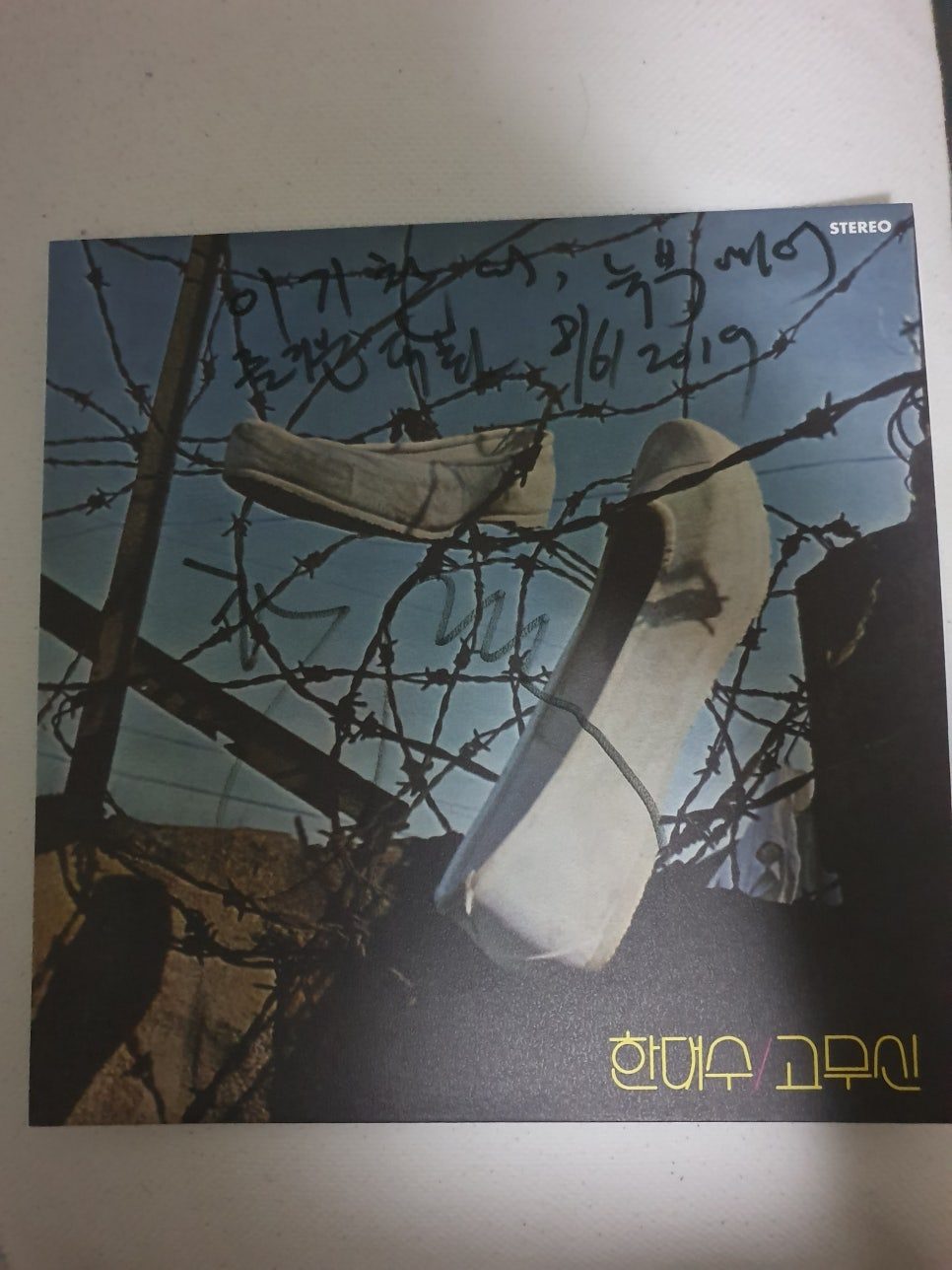
But a problem arose. As soon as it came out, the Ministry of Culture and Information banned the album and ordered it withdrawn. They called it decadent music. The state looked at the title of my song ‘자유의 길’ (The Road to Freedom) and said, “What? Are you saying there is no freedom?” And at the album jacket: “Why, of all things, are the white rubber shoes that prisoners wear thrown on top of barbed wire? What is this? Are you a Red?”
Oh, how frightening. I was afraid even of the phone ringing, and after that I could not even reach the producer, Eom Jin, by phone. To make matters worse, my first album, 〈멀고 먼 길〉, was also ordered withdrawn. Hahn Dae Soo's music was ‘banned from broadcast, banned from performance, banned from release’. So I was given a death sentence as a musician.
Even so, in those days I was getting on well with the working life of going to the office every day, but even that came to feel empty. In my mid-twenties, overflowing with creativity and energy, I could not make the music I loved, and I fell into depression. Just then Cheon Sung-bok, the paper's culture editor and a master of English literature, often urged drinks on me. I drank with the editor and the editorial writers. In an ‘age of oblivion, an age of drunkenness’ I burned away my desire for music.
Then my wife Myung-shin said, “Dae Soo, you will die like this. Go back to New York, quickly! You can make music again there. Quit your job and let's leave this country.” So I handed in my resignation and boarded a plane for New York. The managing editor, Sam Kim, saw me off: “Mr. Hahn, I had great expectations of you. I am very sorry you are leaving. Well, I wish you luck. GOOD LUCK MY FRIEND.”
That is the story from 1967, when I wrote ‘Land of Happiness’, through my return to Korea in 1969, to my going back to New York later.
Timeline, as written by Hahn Dae Soo
- Wrote the words and music of ‘Land of Happiness’ on the LIRR train from Manhattan to Long Island, USA
- Presented ‘Land of Happiness’ at C'est Si Bon
- Presented ‘Land of Happiness’ on TBC-TV's 명랑백화점
- Solo recital at the Drama Center, September 19–20those present: Lee Baek-cheon, Song Chang-sik, Lee Sang-byuk, Yoon Hyung-joo, Cho Young-nam, Kim Dong-jin, Lee Bong-jo, Kim Jin-sung, Kim Hong-chul, and more than three million TV viewers
- Yang Hee-eun recorded and released ‘Land of Happiness’
- Later sung by many others, including Seo Yu-seok, Kim Jung-hoon, Cho Young-nam, Hong Min and Lee Sun-hee
- Hahn Dae Soo, 〈멀고 먼 길〉, his first recording after his discharge
P.S. I wrote this because it appeared on the internet that my song ‘Land of Happiness’ is a plagiarism of a chanson released in 1973. Malicious lies and rumors like this are always there on the internet. Even after I am dead, if such malicious comments and false claims appear, I ask the Korea Music Copyright Association to protect the song well.
THANK You!1/15/2022 한 대수
Quotes
Quotes
Living is damn it, dying is damn it!
Asked for his motto. It was also the title of his Chosun Ilbo column
I'd like to be called not the Bob Dylan of Korea but the Neil Young of Korea.
On the labels given to him
America used to be called a melting pot, but New York now seems to have boiled over. It has melted over.
Asked about the downside of New York
Sometimes I wish there were no music. A conversation with someone whose voice is good to hear, how good that is.
On an age with too much music
New York is where I am raising my daughter as a citizen of the world, and I have no intention of dying here. I like Seoul.
Asked where life's journey ends
‘Ah, I will live, if only the sun shines.’ I wrote it to give myself courage, because I wanted to die.
On the words of ‘Land of Happiness’, 2022 memoir
Press
Press: interviews and articles
Interviews and articles about Hahn Dae Soo. Titles and links only; most are in Korean.
In English
- 2015.4.9Folk legend looks back on 40 years in music The Korea Herald · Article
- 2020.11.16Folk singer says 'bring back hippies' to solve COVID-19 problems The Korea Times · Interview
- 2020.11.20[Eye interview] 'Peace and love is the best vaccine!' The Korea Herald · Interview
- 2024.10.22Korean folk-rock pioneer Hahn Dae-soo reflects on sorrow, loss and friendship at 76 The Korea Times · Interview
In Korean
- 1998.7.3<가요> 포크록의 기수 한대수 자서전 출간 Yonhap News · Article
- 2002.10.23우리는 진정 한대수를 아는가 Hankyoreh21 · Review
- 2003.1.6[인물연구] 한대수 Monthly Chosun · Article
- 2003.4.15"젊은이들은 인터넷으로 히피 운동중" - <'최후의 히피' 인터뷰> '행복의 나라'의 가수 한대수 Pressian · Interview
- 2005.8.25한대수가 말하는 ‘나의 음반들’ The Hankyoreh · Interview
- 2005.10.7<인터뷰> '더 박스' 내놓은 한대수 Yonhap News · Interview
- 2007.9.13[대중음악 100대 명반]8위 한대수 ‘멀고먼 길’ Kyunghyang Shinmun · Review
- 2007.9.20[문화불평]기억하시나요? 한대수의 40년 음악인생 Weekly Kyunghyang · Review
- 2008.4.25"그의 음악인생은 40년간 '진행 중'" Pressian · Review
- 2013.8.137년만에 새 노래 한대수, 반핵을 부르다 Sports Kyunghyang · Article
- 2014.5.7한대수 "사진은 우리 현실의 가장 정직한 한컷이죠" Yonhap News · Interview
- 2015.4.12한대수 “포크록 대부? 외로웠어. 그래도 양떼에 섞이긴 싫었어” The Hankyoreh · Interview
- 2015.4.149년 만의 앨범 '리버스'는 한대수 음악인생에 바치는 헌사 Hankook Ilbo · Interview
- 2015.8.22[비평의 플랫폼]한대수의 계승자는 누구였나 Money Today · Review
- 2016.3.22[인터뷰] 한대수, 책 쓰고 앨범 내고…히피가 생활인으로 사는 법 Herald Business · Interview
- 2018.1.8흑백사진에 담긴 가수 한대수의 일상…원춘호 사진전 Yonhap News · Article
- 2020.10.19[노래의 탄생]한대수 ‘옥의 슬픔’ Kyunghyang Shinmun · Review
- 2020.10.21[인터뷰]한대수 "마지막 앨범은 코로나로 인류애 없어진 고통 노래" Newsis · Interview
- 2020.10.30코로나 뚫고 귀국한 한대수 "젊은 세대에 무릎 꿇고 용서 구하러 왔다" Hankook Ilbo · Interview
- 2020.11.14“팬데믹 세상 위로할 마음의 백신은 사랑과 평화의 노래” [나의 삶 나의 길] Segye Ilbo · Interview
- 2021.7.26'물 좀 주소' 한대수, 70대에 뉴욕 무대 흔들다 Asia Economy · Interview
- 2023.11.6‘물좀 주소’의 가수 한대수 필름 사진집 ‘삶이라는 고통’ 출간 Segye Ilbo · Article
- 2023.11.15딸 등굣길에 만둣국 끓이며... 이 가수가 40년 담은 '삶의 굴곡' Hankook Ilbo · Article
- 2023.11.16‘행복의 나라’ 한대수가 담은 세상 “고통은 살아있단 증거” JoongAng Ilbo · Interview
- 2025.10.1610년 만의 국내 무대 한대수 “1020들이 내 목소리 이어가길” The Hankyoreh · Interview
- 2025.10.21'포크 록 거장' 한대수가 오른 무료 공연의 의미 OhmyNews · Article
- 2025.10.31[인터뷰] 10년 만에 한국 무대 오른 포크락 거장, 한대수가 가을에 한 일 Woman Chosun · Interview